
The short answer is NO.
There is currently a lot of contradictory information circulating on the internet associated with an increased risk of depression with finasteride. This is based on faulty case reports and studies (poorly designed studies with selection bias and stimulated reporting).
What Medical Studies Show
Finasteride was first FDA-approved in 1992 at 5-times the dose (5 mg) for Benign Prostatic Hyperplasia. After being on the market for over 29 years at 5 mg, and 15 years at the lower 1 mg, advocacy groups & trial attorneys started reporting that the lower dose (1 mg) of finasteride was causing increased depression, suicidal ideation, and post-finasteride syndrome. The studies used to try to validate their beliefs were case reports (they could never prove an actual association) and poorly designed studies with “selection bias” and “stimulated reporting”. Patients who prefer to avoid oral hormonal therapy altogether often turn to non-hormonal alternatives like Ketoconazole for Hair Loss which works through a different mechanism and carries none of these unproven psychiatric concerns.
Also Read: Minoxidil for Hair Loss: A Guide by Dr. Paul J. McAndrews
There have been high-quality, large-scale genetic and cohort studies that found no significant association between depression and/or suicidal ideation with finasteride use. Here are a few of the most recent medical studies:
-
- A retrospective study published in April 2026 in the Journal of the American Academy of Dermatology (JAAD) explored whether there was an association between 5-alpha reductase inhibitors (finasteride and dutasteride) and the risk of depression or suicidal ideation.[1] The study concluded that neither finasteride nor dutasteride increased a person’s risk of depression. Ironically, the scientific study showed the exact opposite was true. Men with androgenetic alopecia treated with finasteride or dutasteride had a significantly lower risk of depressive episodes, dysthymia, and mood disorders. There were no significant differences in the risk of suicidal ideation and suicide attempts between the control group and patients on finasteride or dutasteride.[2]
- UK Biobank Cohort Study, published in the Journal of Cosmetic Dermatology in December 2025[3], of over 500,000 finasteride patients showed no significant increase in depression or suicide events after adjusting for covariates. This same study was subjected to a Mendelian Randomization Analysis[4], which also concluded there was no supportive evidence of increased mental health risks and oral finasteride use.
- In 2024, a systematic review and meta-analysis of over 2 million patients found no statistically significant association between finasteride and dutasteride and the risk of depression.[5]
- Large studies on older men taking five times the dose (5 mg) of finasteride, compared to the lower dose of finasteride (1mg) used in young men for hair loss, showed no increased risk of depression or suicidal behavior. These factual data points away from a direct biological effect of finasteride and are more likely due to “notoriety bias” (due to increased media coverage).[6]
Also Read: Finasteride Scientific Safety Facts
My Opinion
I have sincere empathy for finasteride patients who are experiencing depression and/or fogginess because I do believe their depression and fogginess symptoms are real. I just do not believe their symptoms are related to finasteride (as various medical studies have verified).
Medical studies have shown that young men experiencing hair loss (before taking finasteride) have a significantly increased risk of anxiety, depression, and social distress.[7] And studies have shown that men with androgenic alopecia after being treated with finasteride or dutasteride actually have a significantly lower risk of depression. It makes logical sense that a young man’s anxiety and depression would improve after they start treating and stabilizing their hair loss.
I have been on finasteride for the last 19 years, and will be on it for the rest of my life. I have prescribed it to my own son, relatives, and friends. I would never personally take or prescribe finasteride if I actually thought that post-finasteride syndrome was even remotely possible. If any concerns remain, I always encourage patients to book one of our Hair Loss Consultations, where we can go over your specific situation in detail.
Also Read: Do Peptides Help Hair Loss?
Sources
- https://www.jaad.org/article/S0190-9622(25)03453-X/fulltext
- https://pubmed.ncbi.nlm.nih.gov/40158535/
- https://pmc.ncbi.nlm.nih.gov/articles/PMC12672405/
- https://onlinelibrary.wiley.com/doi/10.1111/jocd.70579
- https://pubmed.ncbi.nlm.nih.gov/38692949/
- https://pubmed.ncbi.nlm.nih.gov/40082195/
- https://pmc.ncbi.nlm.nih.gov/articles/PMC10084176/
Worried About Hair Loss? Let’s Talk.
Get trusted answers from Dr. McAndrews, a board-certified hair restoration physician with over 29 years of experience. We offer both FUE and FUT hair transplants in Los Angeles at our Pasadena office and offer convenient online consultations that you can reserve from anywhere.
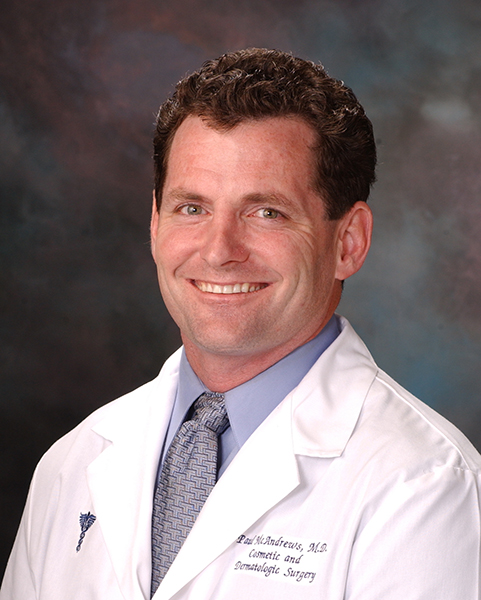
Dr. Paul J. McAndrews is a world-renowned expert in hair loss and hair restoration, and one of only two physicians to have served as President of both the ISHRS and the ABHRS. He is a Clinical Professor at USC/LAC Medical Center and an Expert Medical Reviewer for the California Medical Board, with more than 29 years of experience performing hair transplant procedures, including both FUE and FUT. Serving patients throughout Los Angeles and Southern California, he is regarded as one of the best hair transplant specialists in Los Angeles.