
Before we dive into the details of finasteride and its effect on hair growth, there is a very important point that you need to understand, and that is the hormone behind androgenetic alopecia. So, I’ll explain that first, and then we can go into the details of finasteride.
What Hormone is Responsible for Androgenetic Alopecia?
A century ago, the medical community mistakenly thought testosterone was the cause of balding from androgenetic alopecia. This is because men who were castrated to become eunuchs never went bald until they received injections of testosterone.
In 1974, Dr. Julianne Imperato-McGinley discovered that a small group of people in the Dominican Republic who never experienced androgenetic alopecia had a genetic defect of Alpha-5 Reductase Type 2. This is the human body enzyme that breaks down testosterone into dihydrotestosterone (DHT).
This discovery was instrumental in differentiating the influences of testosterone vs dihydrotestosterone (DHT) on the human body.
In the male fetus, testosterone develops the internal genitalia while DHT develops the external genitalia. Therefore, the male offspring with this genetic defect were born with ambiguous genitalia.
In the male adult, testosterone is responsible for:
-
- muscle mass,
- bone density,
- beard hair thickening,
- sexual function (libido, spermatogenesis, sperm morphology/motility).
In the male adult, DHT is responsible for:
-
- patterned hair miniaturization (balding) seen in androgenetic alopecia,
- hair thickening of the follicle in the nose, ears, & back,
- prostate enlargement, and
- prostate cancer
DHT has not shown to have any beneficial effects in the male adult.
Therefore, these adult men with the genetic defect Alpha-5 Reductase Type 2 live healthy, normal adult male lives (i.e., good muscle mass, good bone density, ability to have children), except:
-
- They never experience male pattern baldness.
- They never develop thick hair in their nose, ears, or backs.
- Their prostates never enlarge.
- They never develop prostate cancer.
When the pharmaceutical companies became aware of the beneficial effects of the lack of Alpha-5 Reductase in adult men, they got dollar signs in their eyes, and there was a race to develop competitive inhibitors to Alpha-5 Reductase Type 2.
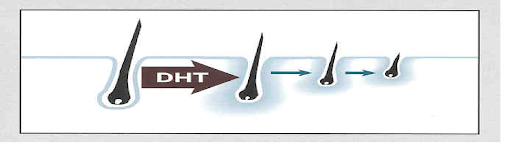
The image below shows how DHT causes miniaturization of hair follicles that results in androgenetic alopecia.
How Finasteride Works?
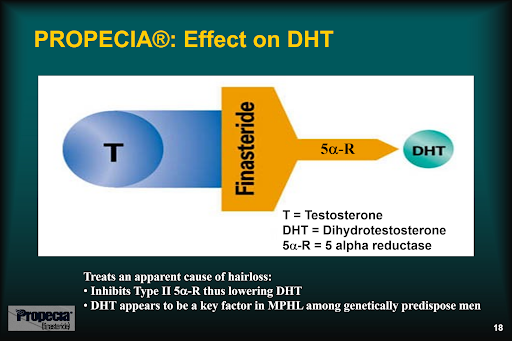
Finasteride is not an anti-androgen; it is an androgen modulator. It works by competitively inhibiting Alpha-5 Reductase Type 2, which inhibits the conversion of a patient’s testosterone into DHT; therefore, patients’ testosterone levels increase by 10-15% and their DHT levels decrease by 65-70%, respectively, while taking finasteride.
The image below shows how finasteride limits the amount of Testosterone being converted to Dihydrotestosterone.
Also Read: Minoxidil for Hair Loss: A Guide by Dr. Paul J. McAndrews
How to Take Finasteride Correctly?
Men experiencing androgenetic alopecia should take one 1 mg tablet orally daily. Try to be consistent (i.e., put it by your toothbrush & take it after brushing your teeth at night). If you forget to take it for a few days, it’s not the end of the world, just re-start taking it once a day.
What is the Most Effective Dose of Finasteride?
Before any drug gets FDA approval, the pharmaceutical company is required to do “dose ranging studies” to determine the most effective dose. In the treatment of BPH, the most effective dose of finasteride was 5 mg. In the treatment of androgenetic alopecia, the most effective dose of finasteride was 1 mg. There was no added benefit of increasing the dose over 1 mg (more isn’t better).
It was also noted that there was no increase in side effects with increasing doses of finasteride.
Things To Know for Graphs
Serum DHT is the hormone circulating in your blood, while Scalp DHT is the hormone in your scalp that actively attacks your hair follicles.
FIN is short for Finasteride.
PBO is short for the Placebo group in a study.
Plasma finasteride refers to the actual amount of the medication (finasteride) currently floating in your bloodstream.
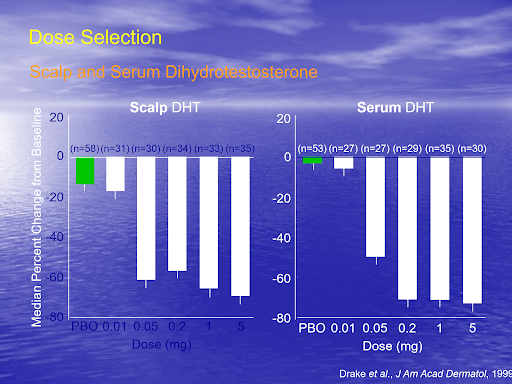
The graphs shown above track the reduction in Scalp and Serum DHT levels as the finasteride dosage increases. Both graphs show 1mg as the optimum dosage.
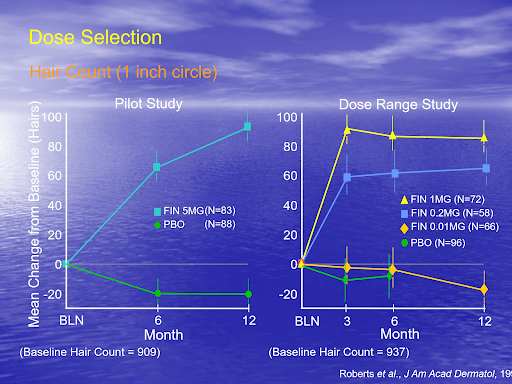
The graphs shown above track the effects of different doses of finasteride on hair count over a period of 12 months. The graphs show 1mg as the optimum dosage.
How Often Do I Need to Take Finasteride?
Before any drug gets FDA approved, they have to perform “dose interval studies”. It was determined that once a day dosing is the proper interval. Taking finasteride less often adversely affects the benefits in treating androgenetic alopecia (so take it regularly, daily).
Also Read: Taiwan’s New Hair Regrowth Serum: Fact or Fiction
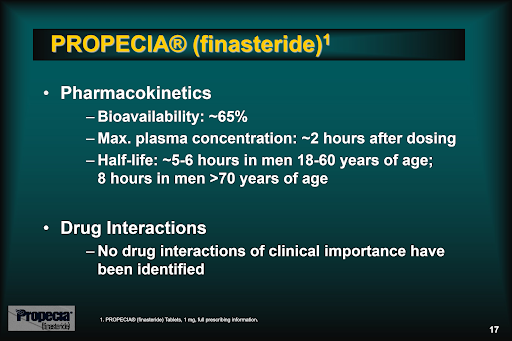
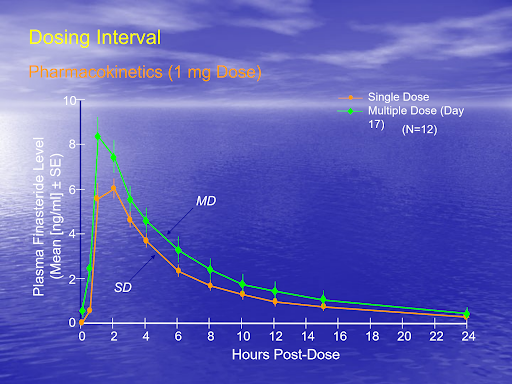
This graph shows that both single and multiple doses of finasteride result in nearly identical plasma levels over 24 hours.
How Long Does Finasteride Take to Work?
I tell my patients that taking finasteride in treating androgenetic alopecia is similar to using toothpaste in treating tooth decay. You don’t judge results on a stopwatch, but on a calendar year. Furthermore, what is most important is not what you see but rather what you don’t see. If you don’t continue to see progressive balding, that’s a great thing!
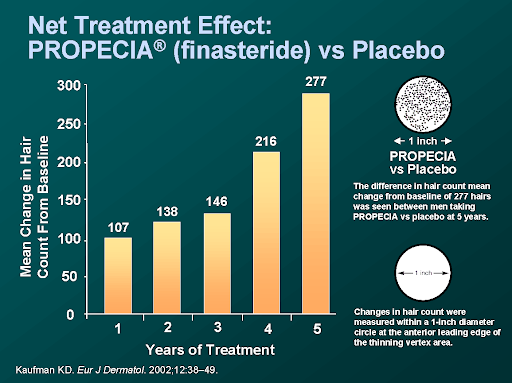
This bar graph tracks the long-term hair count difference between 1 mg finasteride and placebo groups over 5 years.
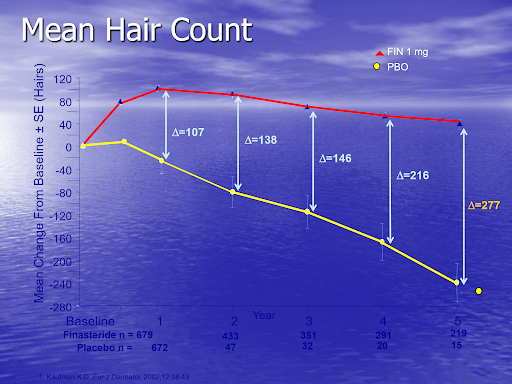
This line graph tracks the long-term hair count difference between 1 mg finasteride and placebo groups over 5 years.
The above hair count studies show that the patients on finasteride (red line) are showing increased hair counts in the first few months of being on finasteride, while the placebo patients (yellow line) continued to decline in their hair counts. However, these increasing hair counts do not translate into a visibly significant cosmetic benefit for at least a year, since the hair is growing at a rate of only 1 cm/month, and it’s slowly getting thicker. I tell my patients not to judge their results for at least a year.
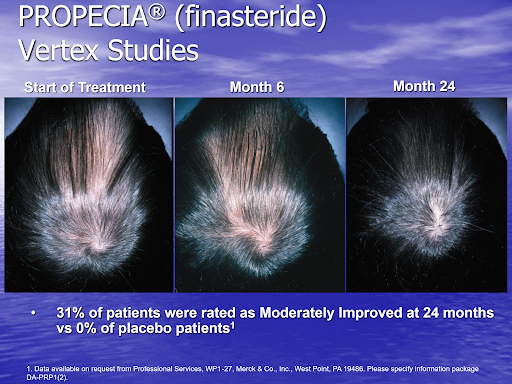
The above Propecia patient does not show much cosmetic benefit at 6 months, but is significantly improved at 2 years.
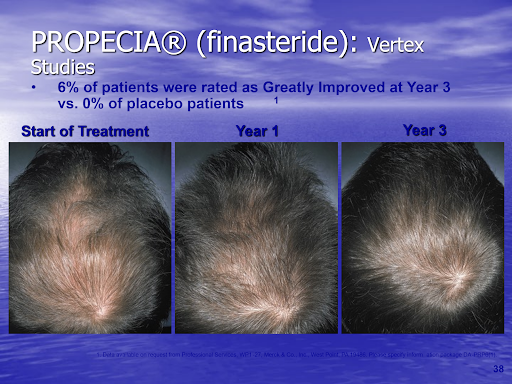
The above Propecia patient shows improvement at 1 year and significantly more cosmetic benefit at 3 years.
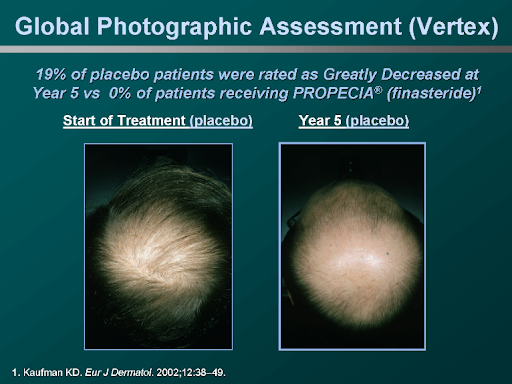
The above image shows “before & after” of a patient who was on a placebo (sugar tablets) for 5 years. If he had been on finasteride for 5 years, he would have had a 90% chance of having just as much, if not more, hair than the “before” picture. Again, the major benefit of finasteride is “what you don’t see”, which is the progressive hair loss seen with the natural aging/balding process.
Does Finasteride Eventually Stop Working?
Peak improvement is seen in the vertex at 3 years of treatment. After 3 years of finasteride treatment, every patient starts thinning. This does not mean it is not working; patients are thinning but at a significantly slower rate than the patients not taking finasteride. Similarly, fluorinated toothpaste does not stop tooth decay completely; it just significantly reduces the rate of progression as the patient ages.
Is Finasteride More Effective in Certain Areas?
Finasteride, like minoxidil, is more effective in the Vertex area versus the Frontal & Mid Forelock.
Patients need to readjust their expectations for results in the frontal and mid forelock. The goal should be “keep your existing hair”, not bringing back the frontal hairline or increasing density. If the goal is to bring back the frontal hairline or increase density to the frontal forelock, that is when a hair transplant is needed. Finasteride is still of the utmost importance to keep your existing genetically prone hair in the frontal and mid forelock.
Does Finasteride Not Work In Some People?
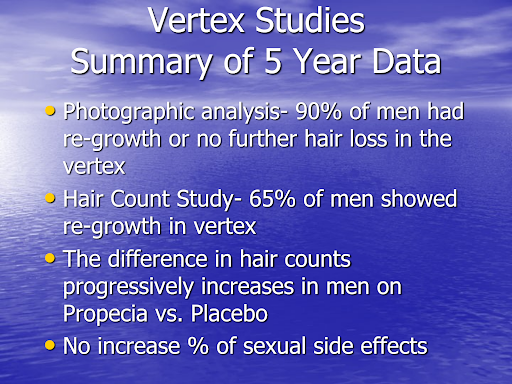
As you can see from the data on the 5-year vertex study, 90% of men were as good, if not better, via photographic analysis; therefore, 10% of patients were doing worse at five years. Does that mean it doesn’t work in 10% of the patients? NO, it works even in those 10% that were doing worse. The 10% that were doing worse in the 5-year Vertex studies were stratified out and compared to the placebo group, and they were still doing much better than the placebo group.
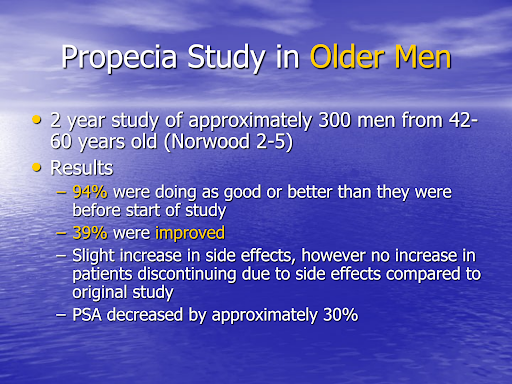
Does Finasteride Work In Older Men?
Yes, it works in any man that is producing testosterone, which is being converted into DHT (i.e., puberty until death).
What Happens If You Stop Finasteride?
If you stop taking finasteride, you will lose all its benefits.
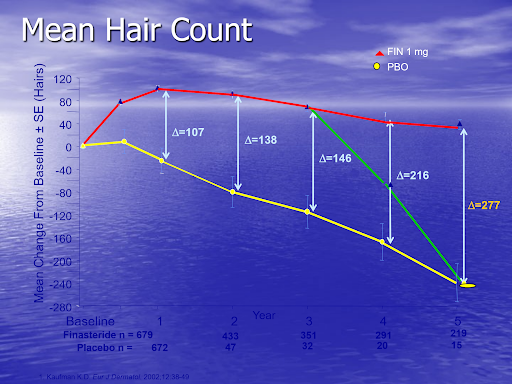
The above graph shows the significant loss (green line) when the finasteride patients were switched to the placebo in the studies. Within 2 years, these patients lost all the benefits of taking finasteride.
When Is the Best Time to Start Taking Finasteride?
If hair loss bothers you, and you are starting to see the initial signs of androgenetic alopecia, the simple answer is “the sooner the better”. Finasteride treats an aging process (androgenetic alopecia), similar to toothpaste treating an aging process (tooth decay). You don’t wait until you only have half your teeth in your mouth before you decide to start brushing your teeth.
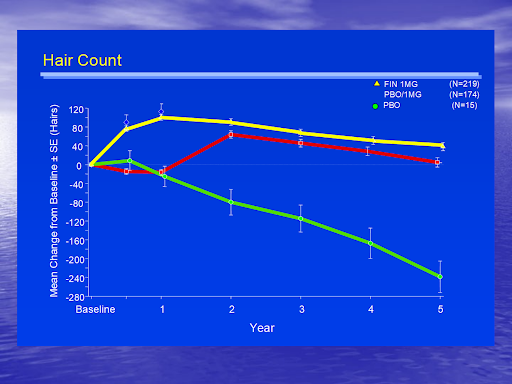
The above graph represents patients who were started on finasteride 1 year after (red line) compared to patients started on finasteride from the start of the study (yellow line). The graph shows that the patients who started on finasteride after 1 year did have significant improvement, but they did not catch up to the patients who started on it at the initiation of the study. THE SOONER THE BETTER.

I bet you can guess which of the above identical twins is the one taking finasteride.
Can Finasteride Cause a Shedding Phase?
Yes, but it is absolutely nothing to worry about. Starting any medication or having any trauma can cause a patient’s follicles to synchronize and go into a shedding phase, similar to the normal shedding of a cat or a dog. This synchronized shedding is called Telogen Effluvium. It lasts about 2-3 months. There is no treatment, and it resolves itself. Cats and dogs shed like crazy, but they do not go bald because all their follicles continue to produce more hair after the shed hair leaves the follicle.
Can Finasteride Be Applied Topically to the Scalp?
The answer is YES. A patient would need to get a doctor to have a pharmacist compound the finasteride into a solution to be applied topically. This is an off-label use of finasteride since it is only FDA-approved orally. However, minoxidil solutions were compounded by physicians off-label for years before it finally got FDA-approved topically as Rogaine.
The topical use of finasteride has not gone through studies determining its efficacy in treating androgenetic alopecia. I do think topical finasteride is effective, but I don’t think it’s anywhere close to as effective as oral finasteride.
The reason Topical finasteride is not as effective as Oral finasteride:
-
- Absorption through the stratum corneum of the skin can be a problem
- It’s not applied to all of the follicles experiencing androgenetic alopecia
- Topical application does not inhibit the conversion of the majority of the DHT produced in your body
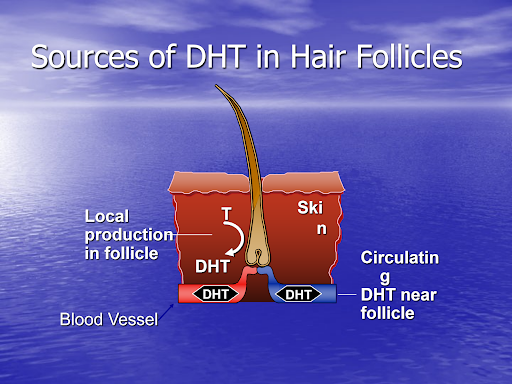
If topical finasteride is absorbed adequately, it will still only inhibit the local conversion of testosterone into DHT. Whereas the vast majority of a patient’s circulating DHT is converted in the liver, and this circulating DHT will go up to the hair follicles and cause miniaturizing effects in the balding area.
The other potential risk in topical finasteride (but not in oral finasteride use) is that the topical finasteride can get on your pillow. There’s the medical-legal risk of causation for any birth defect in a developing fetus by being absorbed through a pregnant wife’s skin who came in contact with the topical finasteride.
Side Effects and Safety
There are a lot of pontifications in the media and on the Internet about various side effects of finasteride. Unfortunately, much of this media and internet noise is misinformation and not valid.
A. Sexual Side Effects
Sexual side effects are the only statistically significant side effect shown in the double-blind placebo-controlled finasteride studies done on both the FDA approval of finasteride for BPH and androgenetic alopecia. There were NO statistically significant side effects for fogginess, depression, headaches, or permanent erectile dysfunction (this is the noise reported on the internet).
Patients taking finasteride have increased serum testosterone levels, typically by 10-15%; therefore, a valid question would be “Are men taking finasteride libido increased?” Unfortunately, the FDA does not allow pharmaceutical companies to report positive side effects during the FDA approval process. I have just as many patients stating that their libido is better than ever when I see them back after a year.
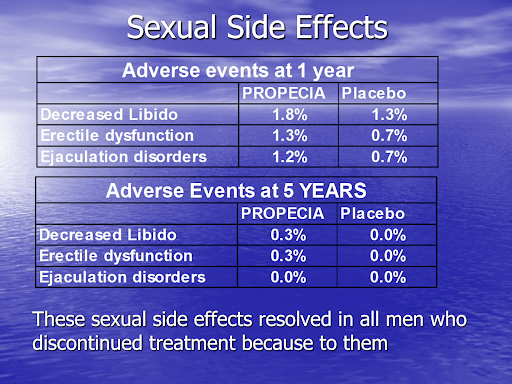
As shown in the above chart, once the placebo effects wash out, the risk of decreased libido or erectile dysfunction is 0.3%. It is statistically significant, but it is very rare. 1 out of 333 men on finasteride will have decreased libido or erectile dysfunction secondary to finasteride. Furthermore, these side effects resolved in every patient with discontinuation of the medications. Unfortunately, the benefits of increased hair also resolved.
B. Ability to Bear Children
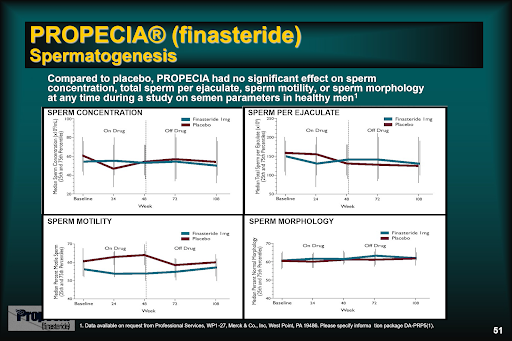
The short answer is it does Not affect your ability to have children. The spermatogenesis study results(image below) reveal that there is No Effect on:
-
- Sperm Concentration
- Sperm Motility
- Sperm Morphology
- Sperm per Ejaculate
C. Semen Exposure to a Pregnant Woman
There is NO RISK!. Studies found that using the highest semen level of finasteride that was detected in a man on Propecia, and assuming 100% absorption, a woman exposed to 3 liters of semen a day would still not affect the fetus.
This means that your partner can take finasteride while you are trying to conceive. It won’t cause any problems. The take-home message is that pregnant women should not take finasteride, but the male partner can take it.
D. Pregnant Women Touching Finasteride Tablets
There is NO RISK!.
-
- Tablets are sugar-coated; there is no risk of a pregnant woman touching the active ingredient in the tablet.
- Pregnant women should not touch “crushed” tablets.
E. Effect on the Prostate
Finasteride was first FDA-approved to treat benign prostate hypertrophy over 30 years ago. It has beneficial effects by shrinking the size of the prostate and helping with urine flow. Finasteride lowers the PSA levels in men, but this does not adversely affect the value of the test.
There was a large study done by the US National Cancer Institute of over 18,000 men taking 5 milligrams of finasteride, which showed there was an overall approximate 24% decreased risk of prostate cancer. However, there was a slight increase in the incidence of aggressive prostate cancer in this group. This increase in incidence was not determined to be an increased risk, but rather due to making it easier to detect earlier, due to shrinking the overall size of the prostate. Since finasteride did not decrease the risk of aggressive prostate cancer, it was not approved by the FDA for prostate cancer prevention.
F. Post-Finasteride Syndrome
Post finasteride syndrome (PFS) refers to a reported set of persistent symptoms (such as decreased libido, erectile dysfunction, depression, fatigue, fogginess) after the discontinuation of finasteride.
I have complete empathy and believe these patients’ symptoms are real; however, I don’t believe any of these symptoms are at all related to the use of finasteride. PFS is largely supported by case reports, which are notoriously unreliable in establishing causation. For instance, a patient could be taking finasteride for 30 days, then he dies in a motor vehicle accident. The “Case Report” would be “A patient taking finasteride dies”. Unfortunately, finasteride could inadvertently be attributed to his death instead of the motor vehicle accident.
This is why it’s very important not to assign causation (or benefits) to “case reports’ which are fraught with study design errors. It’s imperative in order to establish causation to have a well-designed double-blind placebo-controlled prospective study or well-designed retrospective studies without selection bias. These studies are lacking in the establishment of Post Finasteride Syndrome. Finasteride had been FDA-approved for BPH at 5 times the dose of Propecia for decades before any of these symptoms were combined into a syndrome and then reported.
Finasteride for Women
Finasteride is not FDA-approved in women. It was not studied in premenopausal women because of the medical-legal risk of birth defects if taken by a pregnant woman. Therefore, it is contraindicated in pregnant women. Finasteride was studied in postmenopausal women and was shown not to be effective.
Also Read: Ludwig Female Hair Loss Scale: Stages & Treatment Options
Finasteride is used off-label by many Dermatologists in two groups of women:
-
- In premenopausal women experiencing androgenic alopecia who are no longer having children
- Postmenopausal women who are on Hormone Replacement Therapy, which includes testosterone
Finasteride vs Other Hair Loss Treatments
I consider Finasteride or Dutasteride as our best preventative treatment for men with androgenetic alopecia.
Minoxidil, topically or orally, is also effective, and since it works on a different mechanism of action, I think it is synergistic to be used in conjunction with either Finasteride or Dutasteride.
I’m not a big believer in PRP. The studies showing efficacy with PRP did not have the greatest study designs or endpoints in determining its efficacy. The current PRP study designs and endpoints would never get FDA-approved. I think there’s one absolute truth of PRP: it makes money for doctors.
The preventative medical treatments and hair transplants for androgenic alopecia are accomplishing two different goals, similar to toothpaste and a dentist in treating tooth decay. Toothpaste slows tooth decay, and a dentist fills in a cavity. Similarly, preventative medical treatments slow androgenetic alopecia, where a hair transplant surgeon fills in the cavity caused by the progressive thinning nature of androgenic alopecia.
A patient’s hair restoration goal is what dictates the course of treatment. If the goal is to slow the progressive nature of androgenic alopecia, the preventative medical treatments are the primary treatment. If the goal is to increase the density in a significantly balding area, the medical therapies are not going to accomplish the goal, and hair transplants are necessary to fill in the balding area. However, if the patient is not on the preventative medical therapies, the hair transplant surgeon runs the risk of eventually running out of the limited good genetic hair.
Also Read: Is Clascoterone the Miracle Cure for Hair Loss?
Who Is a Good Candidate for Finasteride?
Any patient who has testosterone being produced in their body, who is developing androgenetic alopecia, and desires to keep their hair is a good candidate to be on finasteride.
Androgenetic alopecia and tooth decay are both progressive diseases of aging and don’t stop until the patient dies.
Obviously, the ideal time to start finasteride is early in the course of androgenic alopecia, just like the best time to start brushing your teeth is early. You don’t wait until you have half your teeth left before you finally start brushing your teeth. However, even men who are significantly balding from androgenetic alopecia are still candidates for finasteride; just as patients with half their teeth left still should still be brushing their teeth.
The only person who is not a good candidate for finasteride is the patient who is not bothered by his progressive balding. The old saying “if it’s not broken, don’t fix it”, and some men look great bald.
My Experience with Finasteride
Over the last several decades, my patients who are on finasteride experience much less thinning from the progressive nature of androgenetic alopecia. I do not perform as many hair transplants on my patients who take finasteride. Unfortunately, there’s a fixed and limited amount of good genetic hair in the hair bank; therefore, once the hair bank is depleted, all the financial resources in the world are not going to give that patient more hair.
I have been taking finasteride for the last 19 years and will be on it for the rest of my life, as it helps both my hair and my prostate. My son has also been on finasteride for the last 5 years. We would not be taking it if I thought there was any validity to Post Finasteride Syndrome or if we had any negative side effects. The best reason for taking oral finasteride is that it prevents further hair loss, maintains existing hair, and reduces the chances of an enlarged prostate.
Worried About Hair Loss? Let’s Talk.
Get trusted answers from Dr. McAndrews, a board-certified hair restoration physician with over 20 years of experience. We offer both FUE and FUT hair transplants in Los Angeles at our Pasadena office and offer convenient online consultations that you can reserve from anywhere.
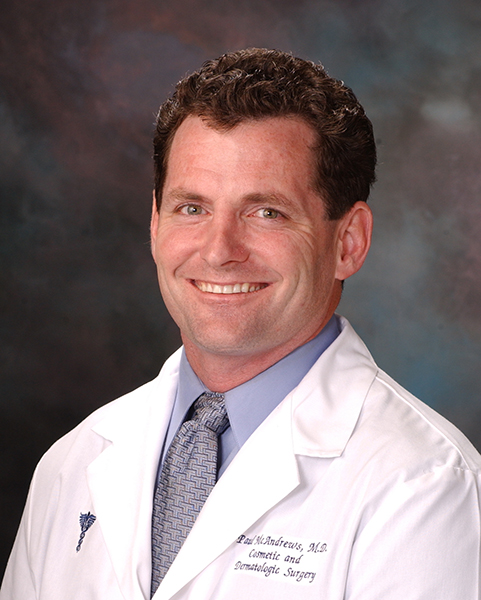
Dr. Paul J. McAndrews is a world-renowned expert in hair loss and hair restoration, and one of only two physicians to have served as President of both the ISHRS and the ABHRS. He is a Clinical Professor at USC/LAC Medical Center and an Expert Medical Reviewer for the California Medical Board, with more than 20 years of experience performing hair transplant procedures, including both FUE and FUT. Serving patients throughout Los Angeles and Southern California, he is regarded as one of the best hair transplant specialists in Los Angeles.