
A hair transplant patient can safely resume swimming only after the skin has completely healed and without any residual scabbing. This time period varies on a few factors:
-
- A patient’s individual healing rate, and
- Did the patients post op regiment include keeping a gel layer on the healing skin, both in the donor and recipient area
Dermatologic studies show cutaneous wounds heal 60% quicker if you keep the wound in an anaerobic environment, such as keeping it covered with either a gel layer or semi-permeable dressing (i.e., petroleum jelly). This regimen has been followed by dermatologists for a century when we treat burn patients and chronic cutaneous wound patients. Scabbing slows healing. The “wives tale” about leaving a wound open to air is incorrect because the wound will dry out, form a scab, and heal significantly slower.
It’s very important to protect the transplanted recipient area & the donor areas during the first week following a hair transplant. This is why it’s important to wear some sort of head covering (hat, beanie, surgical cap, baseball cap, skullcap, etc.), in addition to the gel layer, to protect the healing scalp from the environment. Many times, the hat protects you when you forget about the hair transplant and try to scratch the healing scalp.
The average hair transplant patient who follows the post-op treatment of keeping a gel layer on the healing skin can usually resume swimming in pools, oceans, hot tubs, and other water activities at 2 weeks.
Patients can resume showering the day following their hair transplant surgery while very carefully allowing a little water splash onto the hair, and gently pat-drying (not rub-drying) the hair, followed by reapplying another gel layer to the healing scalp.
Common Questions
Does the time frame vary if it’s FUE or FUT?
No, the time frame for returning to swimming is the same for both the punch FUE and the strip FUT, since the healing time is the same in the recipient area.
The only difference with strip FUT is that the patient needs to be more careful with contact sports (i.e., surfing) since a hard hit to the back of the head could potentially reopen the suture line. This complication has never happened to me in my 30-year hair transplant surgery career.
Why Should You Avoid Swimming After a Hair Transplant?
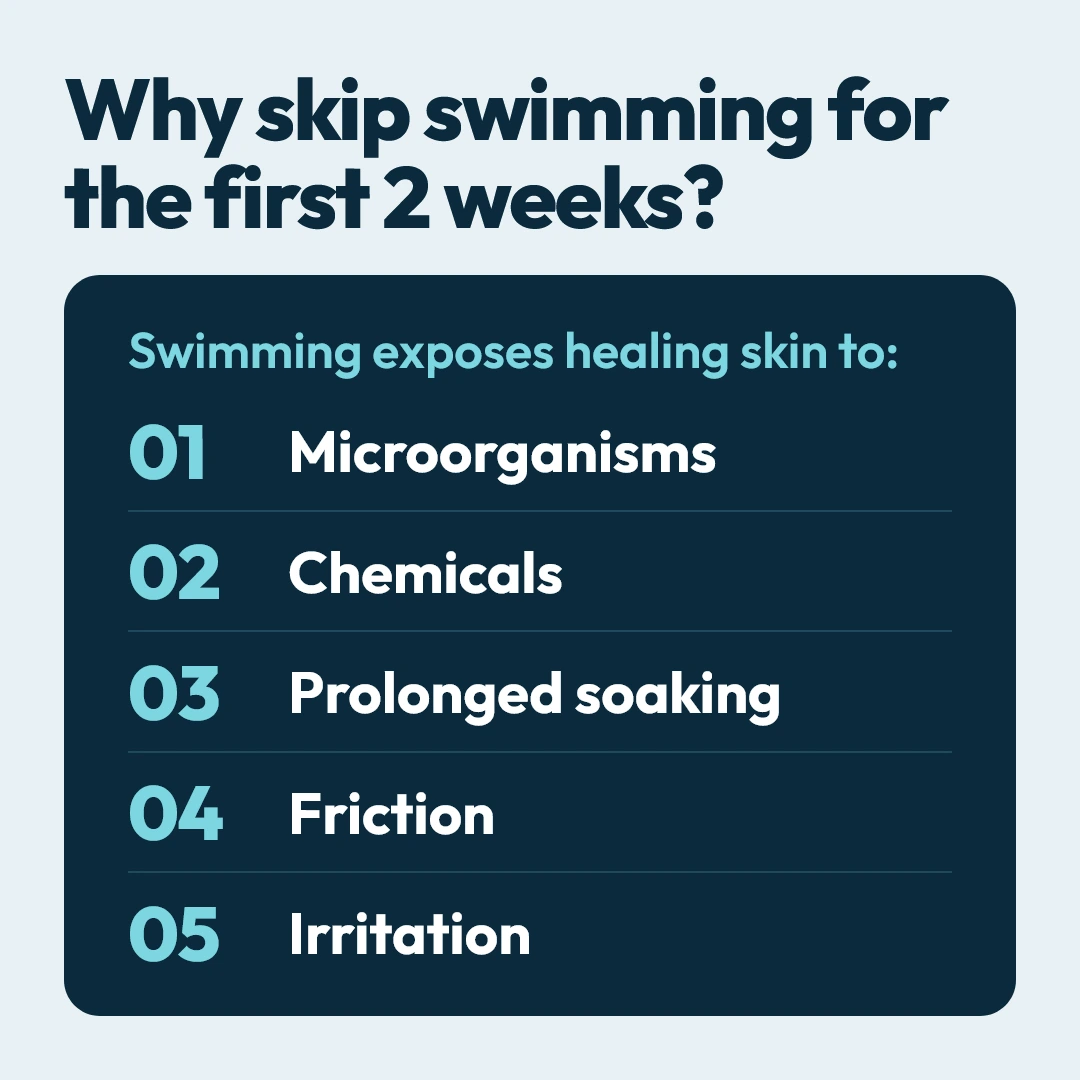
The main reasons for avoiding swimming during the first 2 weeks of hair transplant recovery are the potential exposure to microorganisms, chemicals, prolonged soaking, friction, and possible irritation of the healing areas. This is why the post-op regimen of keeping a gel layer over the healing skin in both the donor and recipient areas is so important. The quicker the skin heals, the quicker you can get back to your normal activities, and the less chance you have of adversely affecting the survival of the grafts.
Since there is chlorine in pools and we don’t know what type of pollutants are in the seawater, rivers, and lakes, it is better to err on the side of caution during the first two weeks following the hair transplant.
When Can You Use a Hot Tub After a Hair Transplant?
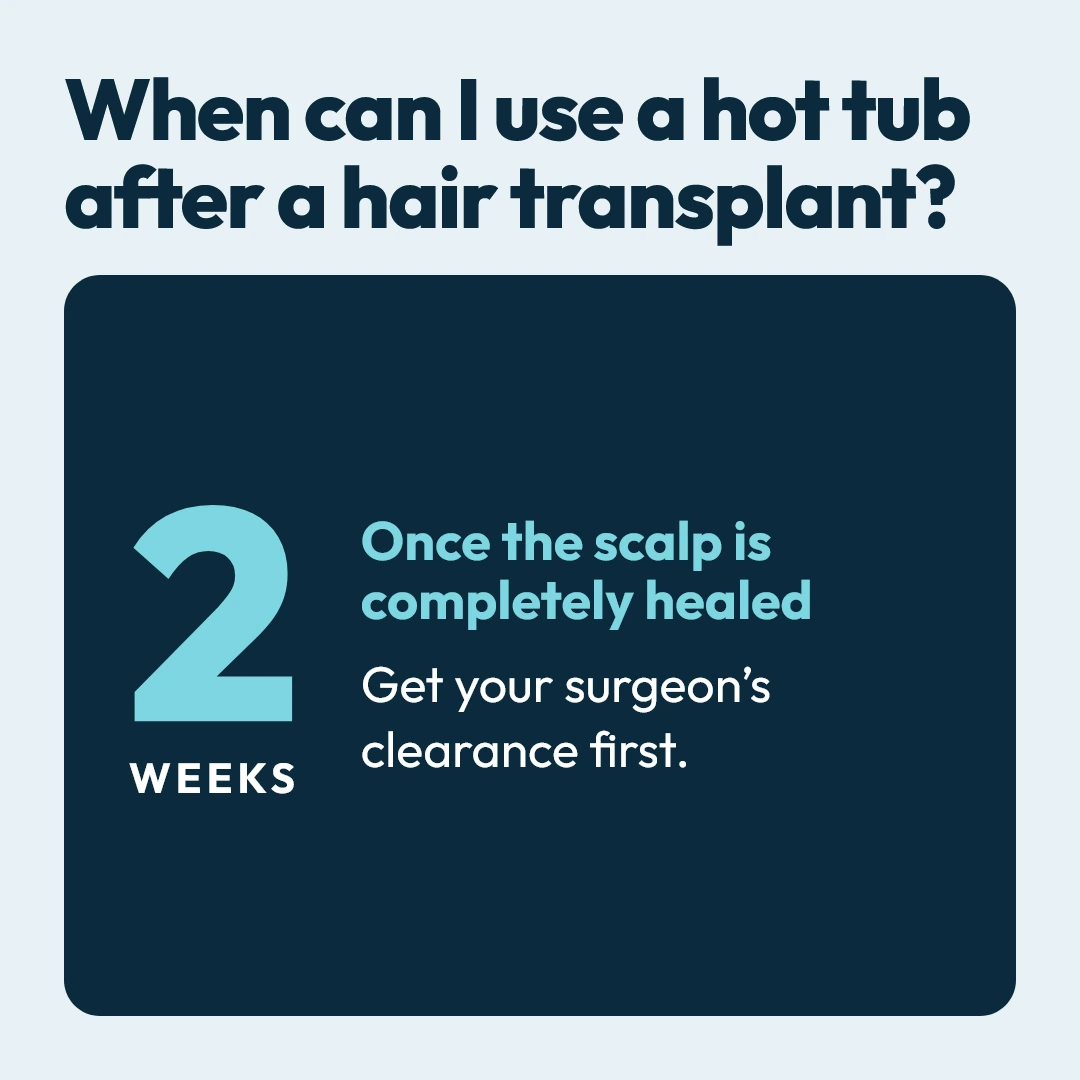
Occasionally, hot tubs are colonized by a bacterium, Pseudomonas folliculitis, which causes inflammation of the hair follicles and surrounding skin. Patients should err on the side of caution with hot tub use until the scalp is completely healed, which is typically in 2 weeks. Follow the recommendation of your surgeon’s specific clearance before returning to hot tubs. However, steam rooms & saunas are safe to use, but you’ll need to reapply the gel layer when you finish (as it will have melted/sweated off).
From My Experience
I have been successfully performing natural-looking FUE and FUT hair transplants in the Los Angeles area of California (Beverly Hills & Pasadena) over the last 30 years. My patient population in the Southern California area is extremely active in water sports such as surfing, scuba diving, parasailing, and swimming. Most patients want to get back into the water as soon as possible following their hair transplant surgery. This is why it’s imperative that you follow my post-op regimen, which significantly reduces the healing time of the skin (ensuring the epidermis and the stratum corneum are completely intact).
Worried About Hair Loss? Let’s Talk.
Get trusted answers from Dr. McAndrews, a board-certified hair restoration physician with over 20 years of experience. We offer both FUE and FUT hair transplants in Los Angeles at our Pasadena office and offer convenient online consultations that you can reserve from anywhere.
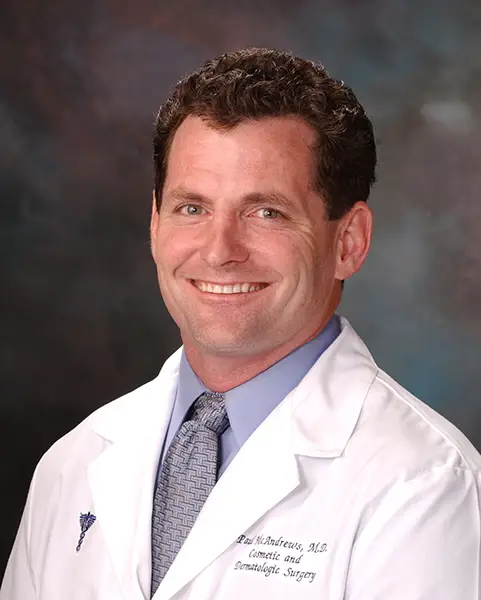
Dr. Paul J. McAndrews is a world-renowned expert in hair loss and hair restoration, and one of only two physicians to have served as President of both the ISHRS and the ABHRS. He is a Clinical Professor at USC/LAC Medical Center and an Expert Medical Reviewer for the California Medical Board, with more than 29 years of experience performing hair transplant procedures, including both FUE and FUT. Serving patients throughout Los Angeles and Southern California, he is regarded as one of the best hair transplant specialists in Los Angeles.