
You hear many hair clinics state the ideal age to have a hair transplant is typically between 30 and 50, but this is not necessarily accurate. The most important factor in determining if a patient is a good hair transplant candidate is “are they realistic about what can be achieved short-term and long-term as they continue to age?” The ideal time to get a hair transplant is not necessarily a specific age. The ideal time is when the patient is emotionally mature, understands the progressive nature of androgenic alopecia, and understands the supply & demand limitations of hair transplants. I have patients in their early 20s who are good hair transplant candidates because they understand the big picture. I have had patients in their 60s who are not good hair transplant candidates because they’re unrealistic about their expectations. The reason you hear that the ideal age for hair transplants is between 30 and 50 is that patients in their 20s are typically unrealistic about their goals, and patients older than 50 are more accepting of their hair loss. The younger a patient is when they start balding, the more likely they are to progress to the most severe Norwood stages of androgenic alopecia. If the hair transplant is started in the early stages by an untrained doctor who does not understand the progressive nature of androgenic alopecia, many times the hair is placed in an area that will look unnatural as the aging patient progressively thins and, all the while, decimates the very limited good genetic hair from the sides of the back, leaving noticeable scar tissue.
At our Los Angeles practice, we see patients as young as their early 20s and as mature as their 90s, each with unique goals and expectations. Over the years, we have learned what works best for every age group, which we will explain below.
Hair Loss Progression Decides the Right Age
When deciding on a transplant, your biological age matters less than whether each individual patient comprehends the progressive nature of his hair loss and the limitations to hair transplants secondary to the supply and demand issue. Androgenic alopecia is an aging process that worsens as you age. There is no perfect treatment, medical or surgical, for androgenic alopecia. Treating androgenetic alopecia is a journey as the patient continues to age. The younger a patient begins experiencing hair loss, the longer their journey will be. This makes it imperative that 1) an ethical doctor helps his young patients comprehend this, and 2) a trained physician has the foresight to be much more conservative the longer the journey is.
Doctors use the Norwood scale to measure how far hair loss has progressed. Patients in the early stages, such as Norwood 2 or 3, usually do better with medical treatments (finasteride and minoxidil) first to slow the progressive nature of androgenetic alopecia. Patients with more advanced hair loss, like Norwood 4 to 6, who have realistic goals and desire more density in the balding region, are often good candidates for a hair transplant. Preventive medical treatments are still important for these patients in order to slow the progression of their hair loss
Also Read: Taiwan’s New Hair Regrowth Serum: Fact or Fiction
Younger patients are usually in the early Norwood stages of hair loss, meaning they most likely will progress as they age into the more severe hair loss patterns (Norwood 6-7). This is why they are often advised to try medications or other treatments first. Waiting until the patient desires an increase in density in a thinning area via hair transplants that will always look natural as the patient ages.
From 20s to 50s: How Age Affects Hair Transplant Success
Getting a hair transplant in your 20s can boost confidence and address early thinning, but it also carries risks. Hair loss at this age often continues to progress, which can leave transplanted areas looking patchy over time. Most young patients are advised to start with medical treatments such as finasteride and/or minoxidil to slow down loss and preserve existing hair.
Also Read: What Are the Best Medications for Hair Loss?
The 30s to 50s are generally the most important time for most patients to have a hair transplant secondary to social and business reasons. Many studies show that men with hair have a competitive advantage over men who are balding. Increasing hair density with hair transplants can help men psychologically get back their competitive edge. Older patients make excellent candidates because their goals become much more realistic.
Choice of FUT vs FUE
FUT (strip method where the existing hair is not cut) can be ideal for those patients who:
-
- Want no one to know that they’ve had the procedure, and
- Want as little cosmetic downtime as possible in order to get back into the working world. Most patients feel comfortable being outside in public without a hat after a week.
FUE (follicular unit excision, the existing scalp hair is shaved) is ideal for those patients who:
-
- Do not want fine linear scar or sutures in the hair-bearing donor region.
- Do not mind having a shaved head following the hair transplant.
- Do not mind wearing a hat to hide the healing process & hair growing out for 4-6 weeks.
Related Article: FUE vs FUT: Which Hair Transplant Method Is Right for You?
How Age Affects Donor Hair Quality and Recovery
Donor hair refers to the permanent hair on the back and sides of the scalp, which changes over time. With age, donor hair density may decrease, especially the farther you go away from the midpoint of the donor region (i.e., towards the nape of the neck and towards the vertex). The linear FUT scar is removed at the midpoint of the donor, where the hair follicles are more likely to stay thick for the rest of a patient’s life (best genetic hair), and the hair above/below the thin scar will hide it. FUE creates 12 times the surface area of scar tissue; therefore, we spread out the scars more diffusely in the donor area. Since FUE diffusely excises donor tissue further away from the midpoint in order to spread out the circular scar tissue, this can affect the long-term quality/viability of the transplanted hair since it’s more likely to miniaturize as the patient ages.
Expert Insights
I have performed hair transplants on a patient as young as 20 years old and a patient as old as 94 years old. They were both good hair transplant candidates because they understood the progressive nature of androgenic alopecia, and their goals were realistic. When dealing with androgenic alopecia, the younger the patient’s age, the longer their hair loss journey is, which dictates the more conservative I have to be in order to keep them looking natural as they age. For the vast majority of young patients, they don’t want to be conservative because they want their 20-year-old hairline back, which automatically makes them not a good hair transplant candidate, since their goals are unrealistic. Unfortunately, there are many untrained and unethical physicians who will be willing to perform the hair transplant on this young patient. These unnatural results can become apparent immediately or become progressively more apparent as the patient continues to age and go bald.
Do not be fooled by the mega hair transplant clinics that are marketing their latest greatest tool or automated technique. It is imperative to research the qualifications, the training, and the ethics of the actual physician who will be behind that tool or technique. A hair transplant is a medical surgery, and the surgeon must be formally trained in both the medical specialty of dermatology (the experts in hair loss) and the surgical art of hair restoration. Anything less is not sufficient to ensure a good hair transplant result.
Worried About Hair Loss? Let’s Talk.
Get trusted answers from Dr. McAndrews, a board-certified hair restoration physician with over 20 years of experience. We offer both FUE and FUT hair transplants in Los Angeles at our Pasadena office and offer convenient online consultations that you can reserve from anywhere.
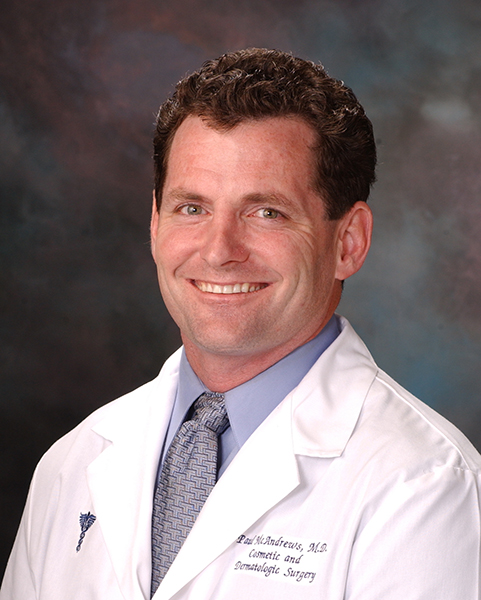
Dr. Paul J. McAndrews is a world-renowned expert in hair loss and hair restoration, and one of only two physicians to have served as President of both the ISHRS and the ABHRS. He is a Clinical Professor at USC/LAC Medical Center and an Expert Medical Reviewer for the California Medical Board, with more than 20 years of experience performing hair transplant procedures, including both FUE and FUT. Serving patients throughout Los Angeles and Southern California, he is regarded as one of the best hair transplant specialists in Los Angeles.