
No, the opposite is true. Exercise is good following both a FUE & FUT hair transplant surgery.
I’m often asked by patients if they can exercise following their hair transplants because they’ve read that they should avoid exercising for weeks to months following either a FUE or FUT hair transplant. My response is that this non-exercise comment is 100% wrong, and most likely came from an untrained hair transplant clinic. Unfortunately, the majority of doctors performing hair transplants have no formal training in a medical residency program on the anatomy, pathophysiology, and wound healing of the skin and the hair follicles.
Research in the dermatologic community has continually shown that physical activity can accelerate wound healing by boosting the immune system and producing anti-inflammatory properties that build and repair tissue.
1. A medical randomized controlled trial of healthy older people published in the Journal of Gerontology showed that exercise significantly accelerated wound healing. The wounds healed 25% faster in the exercise group as compared to the non-exercise group. [1]
2. A study published by the NIH showed a positive effect that exercise has on burn wound healing. [2]
3. A study published in the American Journal of Physiology showed that exercise accelerated cutaneous wound healing and decreased inflammation in mice with full thickness cutaneous wounds. [3]
As a board-certified Dermatologist specializing in Hair Transplant surgery, I know exercise is good for the healing process of the skin and also good for the patient’s mental well-being postoperatively.
Therefore, I encourage my patients to exercise following a hair transplant surgery. I just advise them to be careful and not do anything that could cause them to accidentally hit their head.
Why You Should Exercise After a Hair Transplant Surgery
Exercise has several positive effects on the healing of the skin and hair follicles:
- Enhances blood flow and oxygenation: Exercise increases the heart rate, sending oxygen and essential nutrients to the wound site. This plays a critical role in skin regeneration and collagen synthesis.
- Stimulation of Angiogenesis: Exercise encourages new capillary growth (angiogenesis), which helps bring nutrients to the healing tissue
- Anti-Inflammatory Effects: Excessive inflammation slows healing. Exercise creates an anti-inflammatory environment by reducing proinflammatory cytokines and chemokines.
- Immune System Support: Exercise boosts immune function, which decreases the risk of wound infection
- Molecular Regulation: Exercise stimulates the expression of microRNAs and genes that regulate the keratinocyte migration and inflammatory response.
Also Read: Can I Smoke Before & After a Hair Transplant?
What Form of Exercise Should I Perform Following a Hair Transplant Surgery?
Immediately following the hair transplant surgery (1-3 days):
- Low-Impact activities like yoga, Pilates, and strength training are ideal.
- Other basic exercises like planks, lunges, crunches, or jumping jacks will increase your heart rate without the risk of injury.
- Take a long, brisk walk, which will get your blood pumping and also improve your mental health.
3-7 Days Following the hair transplant surgery:
Mild to moderate exercise, such as a treadmill, a stair-stepper, or a stationary bike
2-3 Weeks Following the hair transplant surgery:
Return to the same intensity workouts as before the surgery
What Form of Exercise Should I NOT Perform Following the Surgery?
- Intense or acute Exercise: Should be avoided for 1-2 weeks since it may increase systemic stress and divert blood flow away from the wound. It also puts you at increased risk of accidentally hitting your head.
- Swimming: Do not submerge your head in pools, hot tubs, or natural bodies of water until the site is fully closed and sutures are removed (typically 2 weeks) to avoid infection.
- Contact Sports: Do not engage in activities that could potentially hit the healing scalp, such as surfing, skiing, racquetball, martial arts, or other contact sports. Typically, you are safe to resume these activities in 2-3 weeks.
Also Read: What Are the Best Medications for Hair Loss?
Protecting the Healing Scalp During Exercise and After a Hair Transplant
The most important factor in expediting the healing of the scalp following a hair transplant is keeping a gel layer, such as Vaseline, on the wound to inhibit scabbing. Wounds heal 60% quicker by keeping them in an anaerobic environment and not letting them scab. Therefore, a thin layer of Vaseline should always be covering the healing skin throughout the day for 5-7 days post-op.
A protective covering should loosely fit over the healing scalp, such as a hat, beanie cap, bandana, or skull cap. The most common complaint following the transplant is itchiness of the scalp, so the hat protects you from not only incidental trauma but also from you itching your healing grafts.
Avoid any activity that rubs or stretches the healing skin.
Do not wear helmets or tight hats too early.
Helmets and snug hats can rub against both donor and recipient areas. Withhold tight hats for the first 2 weeks post-op.
Healing differences in FUT and FUE.
FUT involves a fine linear incision that needs careful protection from stretching and tension. Since the scalp is not shaved with FUT, this linear incision is hidden by the hair immediately following the surgery. FUE involves thousands of small circular excision holes that heal in approximately a week. Since the scalp is shaved with FUE, these healing scars are slowly covered by the newly growing hair in 1-2 months.
Related Article: FUE vs FUT: Which Hair Transplant Method Is Right for You?
Expert Medical Advice
If you live an active lifestyle in Los Angeles or anywhere, it is natural to want to get back to your active lifestyle as soon as possible. Many patients who come to my office for a consultation are misinformed by other doctors that they cannot go back to their active lifestyle & exercise for a few months. This “no exercise” information is absolutely incorrect and goes against all documented medical studies. Medical experts know that exercise definitely improves the healing time of wounds and is also beneficial to patients’ mental well-being.
I tell my pleasantly surprised patients that I want them engaged in mild to moderate exercise immediately following their hair transplant surgery, and that they can go back to their full intensity exercise in 2-3 weeks post-op.
Worried About Hair Loss? Let’s Talk.
Get trusted answers from Dr. McAndrews, a board-certified hair restoration physician with over 20 years of experience. We offer both FUE and FUT hair transplants in Los Angeles at our Pasadena office and offer convenient online consultations that you can reserve from anywhere.
Sources
1. J Gerontol A Biol Sci Med Sci. 2005 Nov;60(11):1432-6.
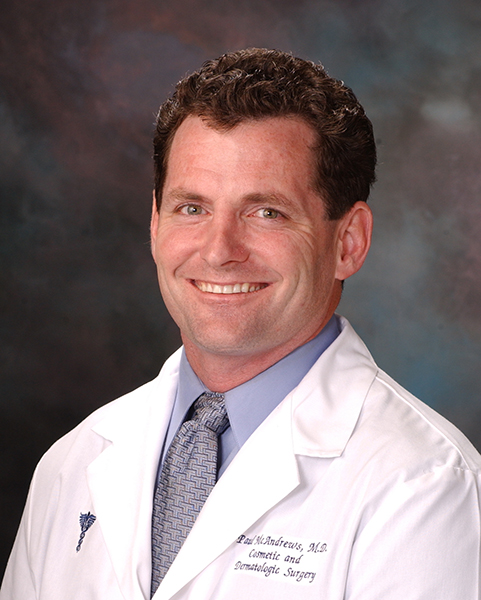
Dr. Paul J. McAndrews is a world-renowned expert in hair loss and hair restoration, and one of only two physicians to have served as President of both the ISHRS and the ABHRS. He is a Clinical Professor at USC/LAC Medical Center and an Expert Medical Reviewer for the California Medical Board, with more than 20 years of experience performing hair transplant procedures, including both FUE and FUT. Serving patients throughout Los Angeles and Southern California, he is regarded as one of the best hair transplant specialists in Los Angeles.