
As a board-certified dermatologist specializing in hair loss and hair transplant surgery, “Do steroids cause hair loss?” is one of the most common questions I hear in my Los Angeles practice. Many of my patients are physically active, train regularly, or have been exposed to anabolic steroids, testosterone therapy, or other hormone-altering substances. They are often worried because they noticed sudden thinning or shedding and want to know if steroids are to blame.
The short answer is this: Steroids do not create hair loss out of nowhere. However, steroids can significantly accelerate hair loss in people who are genetically predisposed. Understanding that distinction is critical.
Understanding Hair Loss Genetics
Male and female pattern hair loss, also called androgenetic alopecia, is genetically determined. If you are predisposed to this condition, your hair follicles are sensitive to androgens, particularly dihydrotestosterone. Over time, DHT causes progressive miniaturization of the hair follicle, leading to thinner hair, shorter growth cycles, and eventual permanent hair loss.
If you do not carry this genetic sensitivity, steroids alone will not suddenly make you bald. If you do carry the gene, steroids can dramatically speed up a process that would have otherwise progressed slowly over many years.
Also Read: Creatine and Hair Loss: What You Need to Know
What Types of Steroids Are We Talking About?
Not all steroids affect hair the same way, and this is where confusion often arises.
Anabolic Steroids
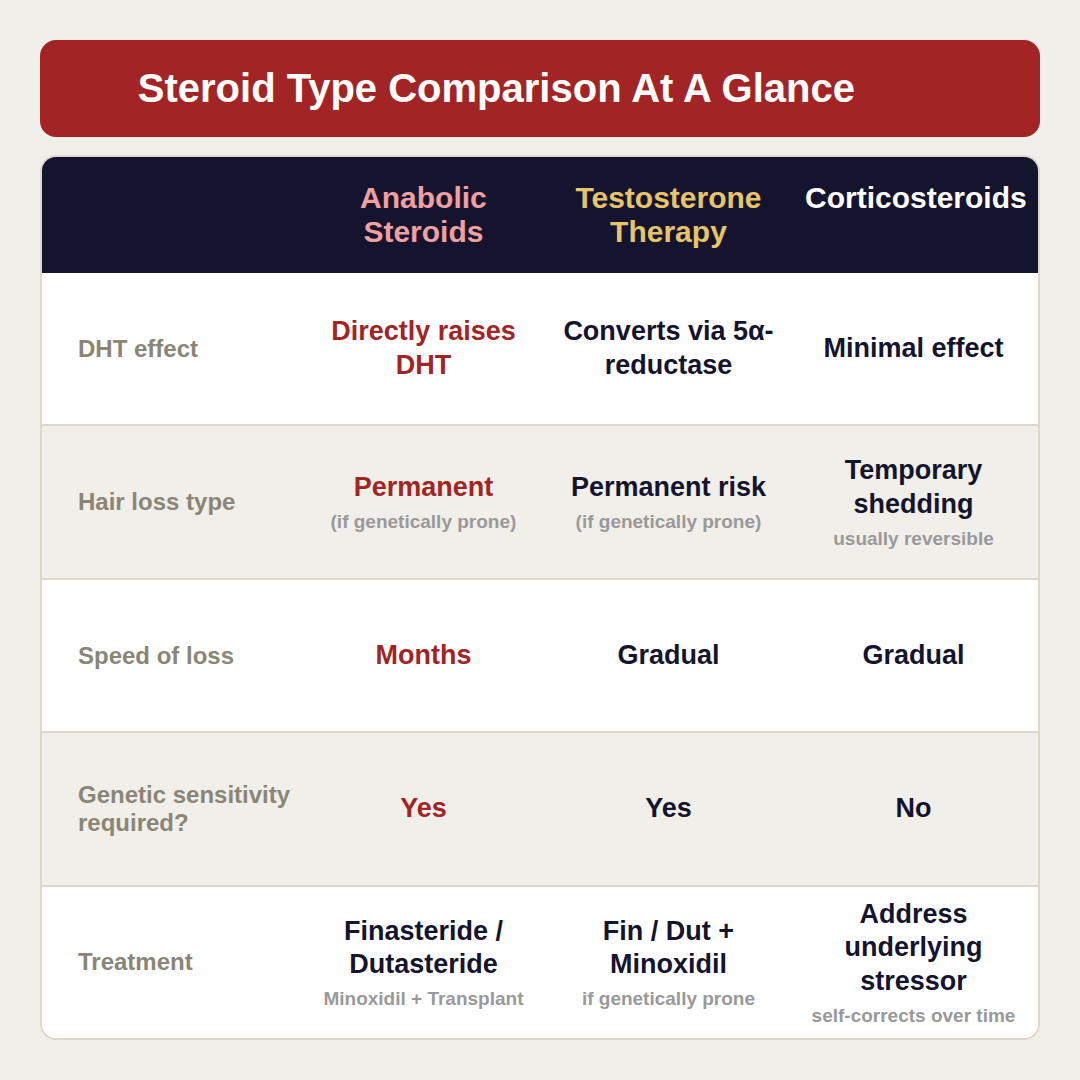
Anabolic steroids are synthetic derivatives of testosterone commonly used for muscle growth and performance enhancement. These compounds significantly increase androgen levels in the body and often increase DHT levels directly or indirectly. In genetically susceptible individuals, this can lead to rapid and noticeable hair thinning, particularly at the temples, hairline, and crown.
In my Los Angeles hair transplant clinic, I frequently see patients who experience dramatic hair loss within months of starting anabolic steroids. Many of my patients are surprised by how fast it happens.
Testosterone Replacement Therapy
Medically supervised testosterone therapy does not automatically cause hair loss. However, testosterone converts to DHT through the enzyme 5-alpha reductase. If DHT levels rise and the patient is genetically sensitive, hair loss can accelerate. This does not mean testosterone therapy is unsafe or inappropriate.
It does mean hair loss risk should be discussed and monitored, especially in men with a family history of baldness. Adding a topical treatment such as Ketoconazole alongside testosterone therapy can help support scalp health while DHT levels are being monitored.
Corticosteroids
Corticosteroids are used to treat inflammation, autoimmune disease, and allergic conditions. These are not typically associated with male pattern hair loss. In some cases, long-term or high-dose use may trigger temporary shedding known as telogen effluvium, but this is usually reversible once the underlying stressor is removed.
Is Steroid Related Hair Loss Permanent?
Temporary shedding caused by hormonal shifts may recover over several months. Permanent hair loss occurs when follicles become miniaturized beyond the point of recovery. Once that happens, hair does not regrow on its own.
This is why early intervention matters. The sooner hair loss is addressed, the more follicles we can preserve.
Can Steroid Related Hair Loss Be Prevented?
In many cases, yes. Medical therapy aimed at reducing DHT activity, improving follicle health, and stabilizing hair loss can significantly slow or halt progression. This is especially effective when started early. In my practice, prevention is always the priority. Hair transplants are a powerful tool, but preserving existing hair is even more important.
Patients using testosterone or with a history of anabolic steroid exposure should be evaluated medically rather than relying on gym advice or online forums.
Treatment Options for Steroid-Related Hair Loss
Treatment depends on whether steroids have caused temporary shedding or accelerated permanent hair loss in genetically susceptible individuals.
Medical Treatments
Medications that reduce dihydrotestosterone activity are the cornerstone of treatment. Finasteride and dutasteride are commonly used to slow or stop further follicle miniaturization. Topical or oral minoxidil may help improve hair density and support regrowth in weakened follicles. When patients are on testosterone therapy, these medications must be carefully managed to balance hormonal health and hair preservation.
Also Read: What Are the Best Medications for Hair Loss?
Surgical Option
If hair loss is advanced and medically stabilized, hair transplant surgery using FUE or FUT techniques may be considered to restore lost hair. Early diagnosis and intervention remain critical, as permanently miniaturized follicles cannot be revived without surgical restoration.
Also Read: FUE vs FUT: Which Hair Transplant Method Is Right for You?
Expert Advice
Many of my patients are taking testosterone and testosterone-boosting supplements. I tell them I love the benefits of testosterone (muscle mass, bone density, libido, etc.); however, I do not like the side effects of the breakdown product of testosterone, dihydrotestosterone (DHT).
As we age and the susceptible tissue’s genetic light switch turns on, DHT causes:
- The hair on the top of the head to miniaturize
- The hair in the nose, ear, and on the back to get thicker & longer
- The prostate to enlarge
- Prostate cancer
This is why during Consultations, I tell patients taking testosterone supplementation that it is all the more important to be taking finasteride to inhibit the conversion of testosterone into DHT.
Worried About Hair Loss? Let’s Talk.
Get trusted answers from Dr. McAndrews, a board-certified hair restoration physician with over 29 years of experience. We offer both FUE and FUT hair transplants in Los Angeles at our Pasadena office and offer convenient online consultations that you can reserve from anywhere.
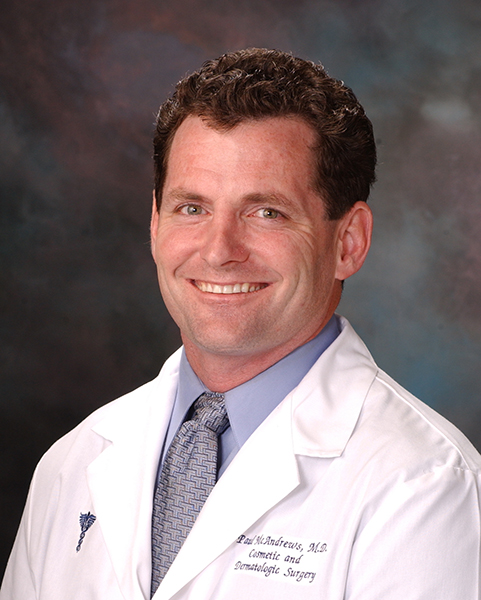
Dr. Paul J. McAndrews is a world-renowned expert in hair loss and hair restoration, and one of only two physicians to have served as President of both the ISHRS and the ABHRS. He is a Clinical Professor at USC/LAC Medical Center and an Expert Medical Reviewer for the California Medical Board, with more than 29 years of experience performing hair transplant procedures, including both FUE and FUT. Serving patients throughout Los Angeles and Southern California, he is regarded as one of the best hair transplant specialists in Los Angeles.